Wearable Biomechanics Data Streams Drive Shifts in Live Sports Wagering Strategies
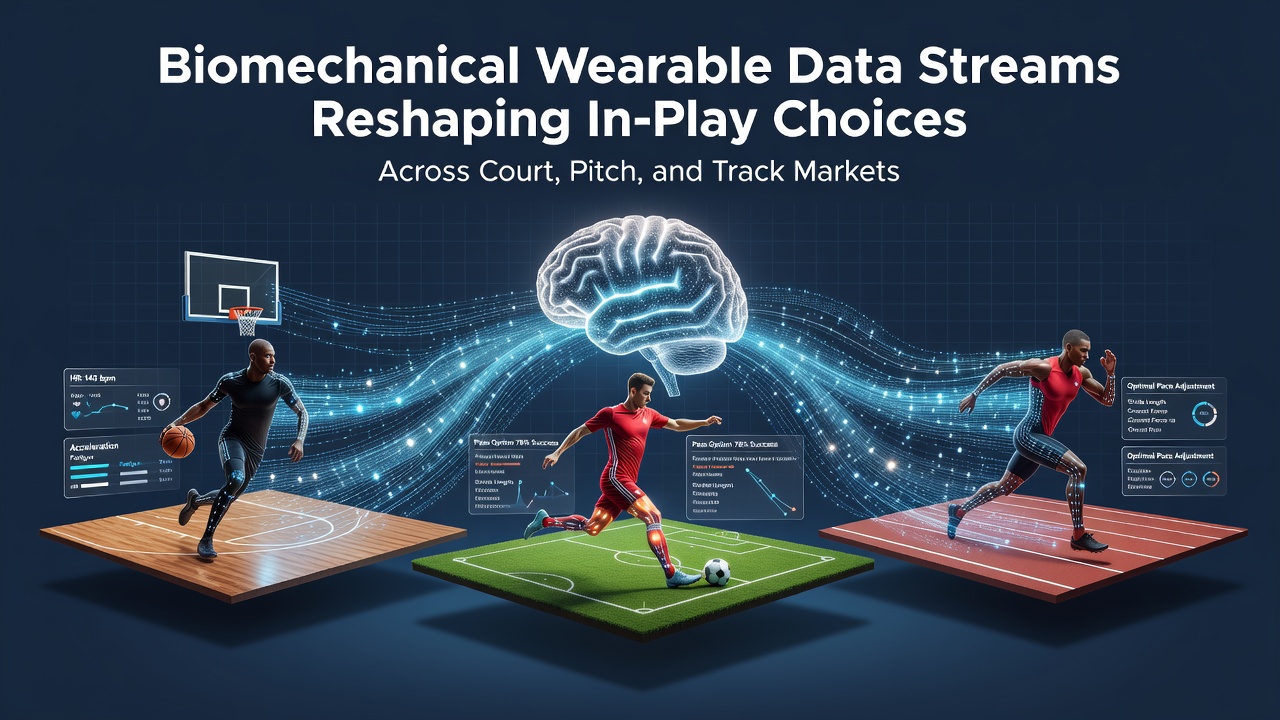
Biomechanical wearable data streams now feed directly into live betting platforms across tennis, football, and horse racing, supplying continuous metrics on player fatigue, joint stress, and stride efficiency that adjust odds in real time. These sensors capture acceleration patterns, muscle activation levels, and heart rate variability, then route the information through algorithms that flag deviations from established performance baselines. Operators integrate the feeds with existing statistical models, allowing bettors to react to emerging physical indicators rather than waiting for score updates alone.
Data Capture Mechanisms in Court Sports
Tennis matches generate high-frequency sensor outputs from wristbands and embedded racket grips that track serve velocity decay and lateral movement symmetry. When a player’s groundstroke power drops below a pre-match threshold, systems flag potential service game vulnerabilities and push updated probabilities to in-play markets. Observers note that rallies extending beyond eight shots often coincide with measurable reductions in footwork explosiveness, prompting platforms to recalibrate set and game odds within seconds of each exchange. Research from the National Institutes of Health shows how these streams correlate with historical match outcomes, giving operators new variables for dynamic pricing.
Pitch-Level Metrics in Football Markets
Football players wear GPS-enabled vests that stream distance covered at high intensity, along with directional change frequency and hamstring load indicators. During matches, spikes in deceleration force often precede substitution patterns, which in turn influence live handicap and goal lines. Data indicates that teams whose central midfielders exceed 85 percent of their sprint distance threshold in the first half show measurable drops in second-half pressing intensity, allowing markets to adjust possession and corner totals accordingly. European sports analytics groups have documented how these biomechanical thresholds align with goal-scoring sequences across multiple leagues, extending the window for informed in-play decisions.
Track Applications in Horse Racing
Horse racing integrates sensor arrays into saddle pads and girth straps that monitor stride length symmetry, respiratory rate, and peak force during turns. When a mount displays asymmetric loading on the final bend, live markets for place and show positions update to reflect reduced finishing potential. Australian wagering authorities have recorded instances where early detection of elevated heart rates in the home straight altered tote payouts by several percentage points compared with traditional speed-figure models alone. The streams also capture recovery intervals between sectional times, supplying data points that distinguish genuine fatigue from tactical holding patterns.
Integration Timelines and Market Response
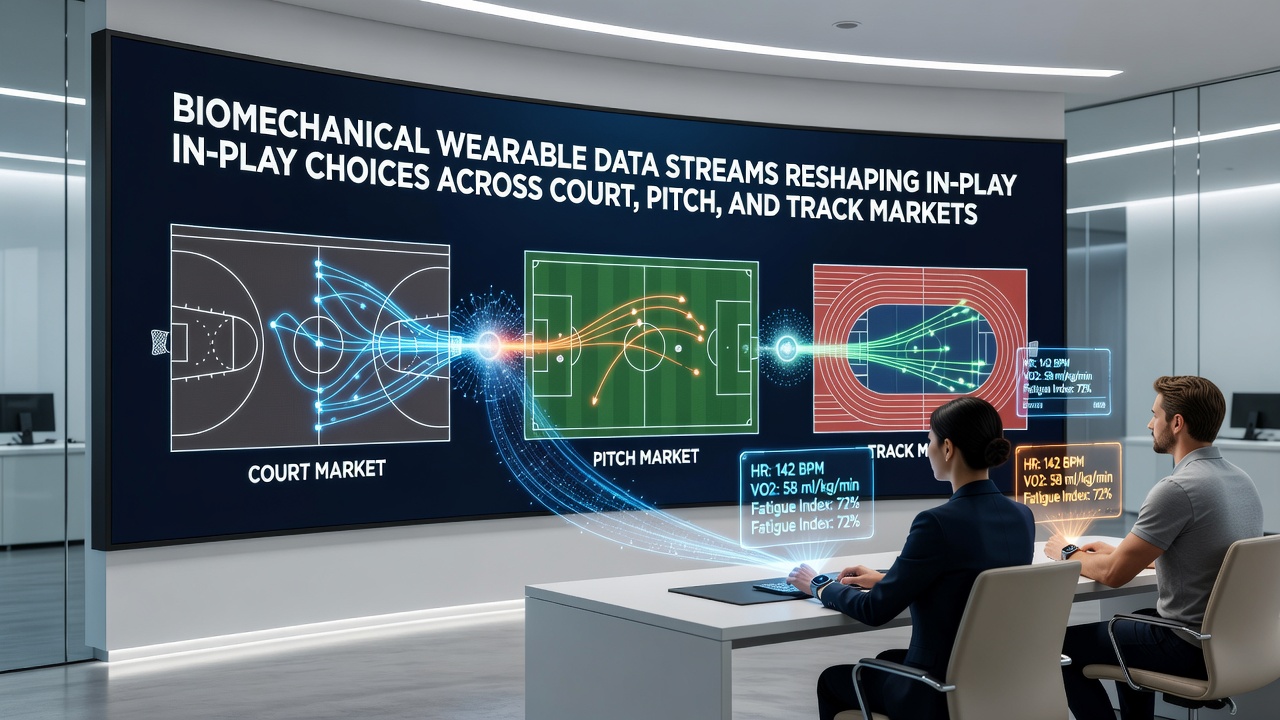
By June 2026 several major operators had completed API connections between wearable manufacturers and their trading engines, shortening latency between sensor output and odds refresh to under four seconds. This speed enables bettors to place wagers on next-point winners in tennis or next-goal scorers in football while the underlying physical data remains current. Studies compiled by the International Sports Betting Research Consortium confirm that markets incorporating these feeds exhibit tighter spreads during high-variance periods, such as tie-breaks or final-furlong sprints, compared with platforms relying solely on score-based models.
Cross-Sport Pattern Recognition
Analysts observe recurring biomechanical signatures that transfer across disciplines: elevated lactate thresholds in tennis players mirror those seen in footballers during extra time, while equine stride asymmetry shares structural similarities with human joint loading data. Platforms now apply machine-learning layers that map these patterns onto unified risk frameworks, allowing a single data pipeline to inform court, pitch, and track products simultaneously. The approach reduces separate model maintenance costs while increasing the granularity of in-play adjustments available to users.
Conclusion
Biomechanical wearable streams continue to expand the variables available for live wagering decisions in tennis, football, and horse racing. Continuous sensor output on movement efficiency, fatigue markers, and force distribution supplies operators with fresh inputs that refine odds throughout events. As integration deepens, markets across these disciplines reflect physical status indicators in addition to traditional scoring data, altering the timing and precision of in-play choices for participants worldwide.