UK Sports Betting Surge: 2026 Report Spotlights £16.8 Billion Yield and 10% Population Engagement
UK Sports Betting Surge: 2026 Report Spotlights £16.8 Billion Yield and 10% Population Engagement

The Big Picture from the Latest Report
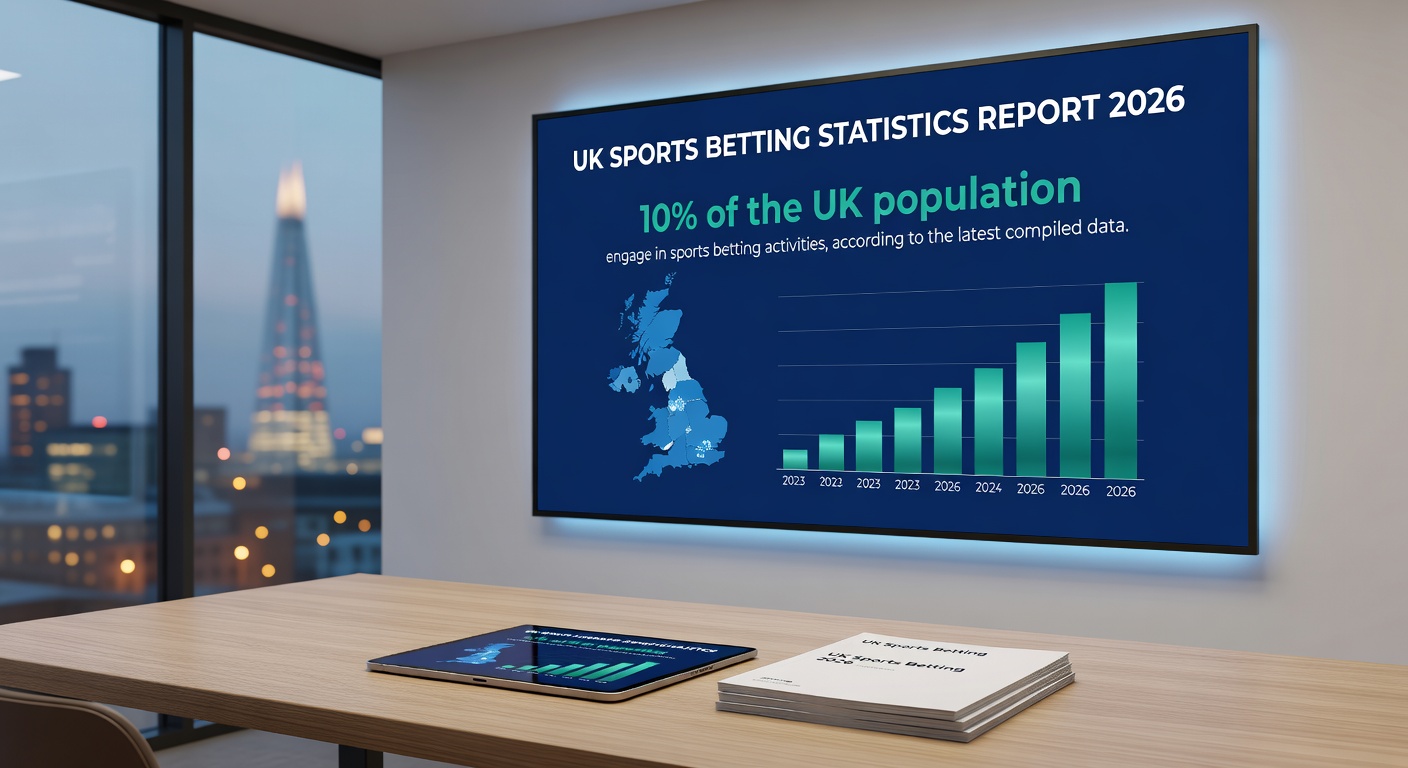
A fresh report compiling UK sports betting statistics projected for 2026 paints a clear snapshot of the industry's momentum, revealing that 10% of the UK population now dives into online sports betting, while the sector churns out an impressive £16.8 billion in annual gross gambling yield, or GGY; this figure underscores how betting has woven itself into everyday leisure for millions, with data pulled straight from Limelight Digital's analysis.
Observers note that such numbers don't emerge in a vacuum, but rather build on steady climbs in digital access and event-driven wagers, especially as major tournaments loom on the horizon; take football, for instance, which commands the lion's share at £1.1 billion GGY alongside 5.8% participation rates among the populace, making it the undisputed kingpin in this arena.
And yet, the report doesn't stop at aggregates, drilling down into how bets get placed, where they happen, and even the sliver of high-risk activity, all while projecting forward to a landscape that feels increasingly mobile-first; that's where things get particularly revealing, since remote betting alone notched £2.4 billion in GGY over the April 2023 to March 2024 stretch.
Football's Unrivaled Pull in the Betting Arena
Football stands out not just for its cultural grip across the UK, but for dominating the stats in this 2026 forecast; with £1.1 billion in GGY and 5.8% of people placing wagers on matches, experts point to Premier League drama, cup runs, and international showdowns as the fuel, turning casual fans into regular punters who bet on everything from match outcomes to player props.
What's interesting is how this leadership trickles through the data, showing football's GGY dwarfing other sports while participation holds steady at that notable 5.8%, a figure that researchers tie to widespread availability of live streams and in-play options; one study highlighted similar patterns, where football bets spike during weekends and midweek fixtures, pulling in bets that contribute disproportionately to the overall £16.8 billion pot.
People who've tracked these trends over seasons often discover that loyalty to clubs amplifies engagement, so a supporter of Manchester United or Arsenal might wager weekly, layering their passion with calculated risks that boost both enjoyment and the industry's yield.
Mobile Bets and the Home Betting Boom
Mobile access drives 43% of all bets in this report's outlook, a testament to how apps have transformed punting from desktop rituals into on-the-go habits, predominantly from home where 95% of those wagers occur; this shift aligns with broader digital lifestyles, allowing users to check odds during commutes or halftime breaks without missing a beat.
But here's the thing: that 95% home dominance speaks volumes about comfort and convenience, since remote setups let people bet from sofas during evening matches or early mornings ahead of continental kickoffs; data indicates remote betting GGY hit £2.4 billion in the prior year, from April 2023 through March 2024, setting the stage for even bigger numbers as 5G rolls out wider and apps refine their user interfaces.
Those who've analyzed platform logs find that mobile users favor quick, single bets over complex multis, yet their volume pushes the overall 10% participation rate, blending seamless tech with the thrill of real-time action.
And while football leads, this mobile wave touches tennis serves, horse races, and rugby scrums alike, with operators optimizing push notifications to capture that impulse right when the iron's hot.
Remote Betting's Steady Climb and Official Backing
The £2.4 billion remote GGY for April 2023–March 2024 emerges as a key benchmark in the report, highlighting how non-physical channels have solidified their role amid evolving regulations and tech upgrades; this period's figures, when layered against the projected £16.8 billion total, show remote play as a powerhouse, especially as March 2026 approaches with its slate of financial reporting mandates that operators must navigate.
Turns out, official tallies from bodies like the UK Gambling Commission reinforce these trends, capturing participation waves that mirror the 10% online sports betting slice; researchers cross-referencing such datasets observe that remote growth stems from secure payments, live data feeds, and promotional hooks like enhanced odds.
One case where experts dug into quarterly breakdowns revealed spikes around major events, pushing that £2.4 billion ceiling higher, while everyday bets from home users provide the reliable base; it's not rocket science, but the combo of accessibility and trust keeps the momentum rolling into 2026.
Problem Gambling in Sharp Focus: A Low-Risk Reality
Amid the growth headlines, the report delivers reassuring stats on risk levels, with only 0.5% of gamblers classified as high-risk problem cases according to recent official data; this low figure, drawn from rigorous screenings, indicates that while participation hits 10%, safeguards and self-exclusion tools hold the line effectively.
Experts who've pored over these metrics note how the 0.5% rate holds across demographics, bolstered by mandatory affordability checks and deposit limits that operators rolled out in recent years; data shows most punters stay in low-risk zones, enjoying football accumulators or mobile singles without crossing into trouble, a pattern that's persisted even as GGY balloons to £16.8 billion.
So, for the 5.8% football faithful or the broader 10% online crowd, the landscape tilts toward measured engagement, where 95% home betting fosters control rather than excess; that's significant because it counters narratives of unchecked booms, painting a sector that's expanding responsibly.
People familiar with longitudinal studies often point out that education campaigns and app-based interventions contribute here, keeping high-risk numbers pinned at 0.5% despite the remote £2.4 billion surge.
Projections Pointing to 2026 and Beyond
Looking ahead, the report's 2026 lens captures a market firing on all cylinders, from football's £1.1 billion GGY to mobile's 43% share, all while remote channels prove their worth with concrete £2.4 billion precedents; as March 2026 nears with updated compliance frameworks, operators gear up for transparent reporting that could fine-tune these dynamics further.
What's noteworthy is the stability in low problem rates at 0.5%, suggesting the 10% participation won't destabilize social fabrics, but rather evolve with tech like AI-driven odds and VR viewing; observers tracking year-over-year shifts see home betting's 95% lock-in as a constant, even as total yield eyes that £16.8 billion mark.
Take one analyst who modeled scenarios: they found football's lead enduring, pulling more into the fold via integrated apps that blend stats, streams, and stakes seamlessly.
Wrapping Up the 2026 Betting Snapshot
This report distills the UK's sports betting pulse into hard numbers—10% participation fueling £16.8 billion GGY, football's commanding 5.8% slice at £1.1 billion, mobile bets at 43% mostly from home (95%), remote yields hitting £2.4 billion, and problem gambling a mere 0.5%—offering a factual foundation for what's shaping the scene ahead.
The reality is straightforward: growth persists responsibly, with data from Limelight Digital and Gambling Commission sources aligning to show a mature, tech-savvy ecosystem ready for 2026's challenges and cheers; punters, operators, and watchers alike can bank on these trends holding the course.