Pace and Pressure: Uncovering How Court Surfaces Influence Tennis Betting Patterns in Summer Slams
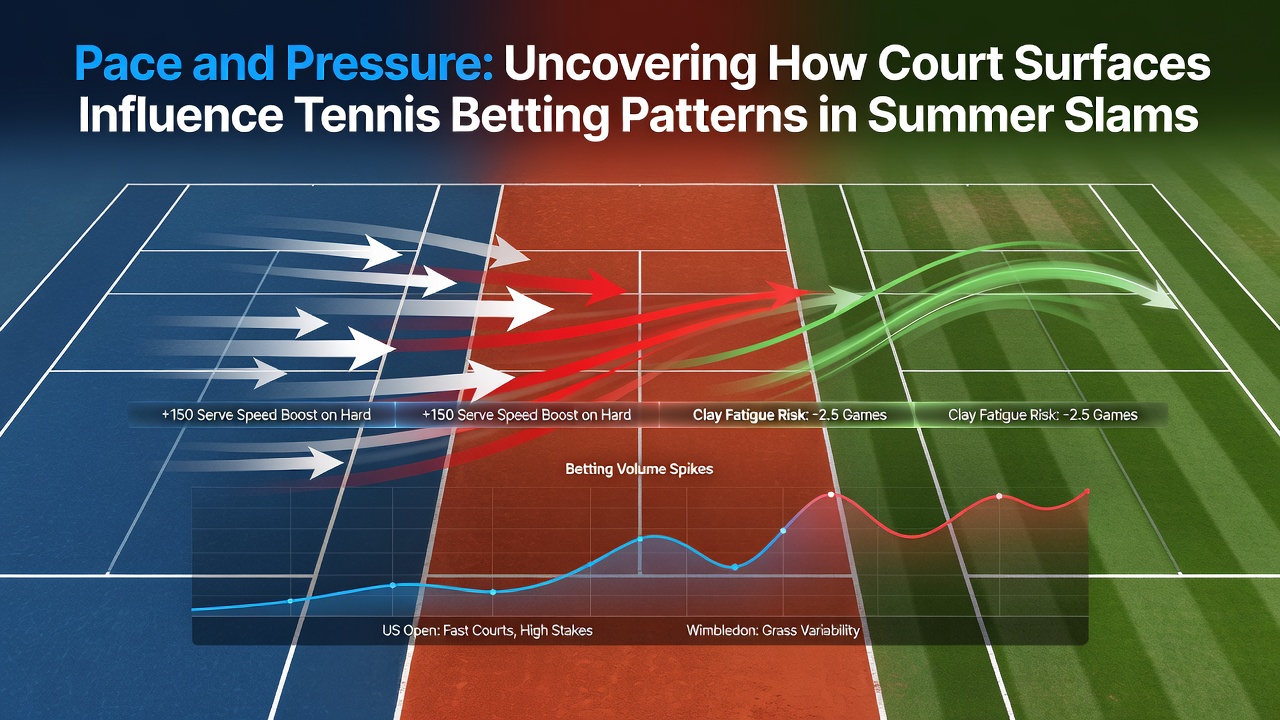
July 2026 brings renewed focus to the summer slams where court surfaces dictate the rhythm of play and reshape how markets respond in real time. Wimbledon unfolds on grass that rewards low bounces and rapid points while the US Open delivers consistent hard court conditions that favor longer exchanges and varied shot selection. Observers note that these differences drive distinct wagering behaviors among bettors who track rally lengths serve percentages and player fatigue across multiple rounds.
Grass Court Characteristics at Wimbledon
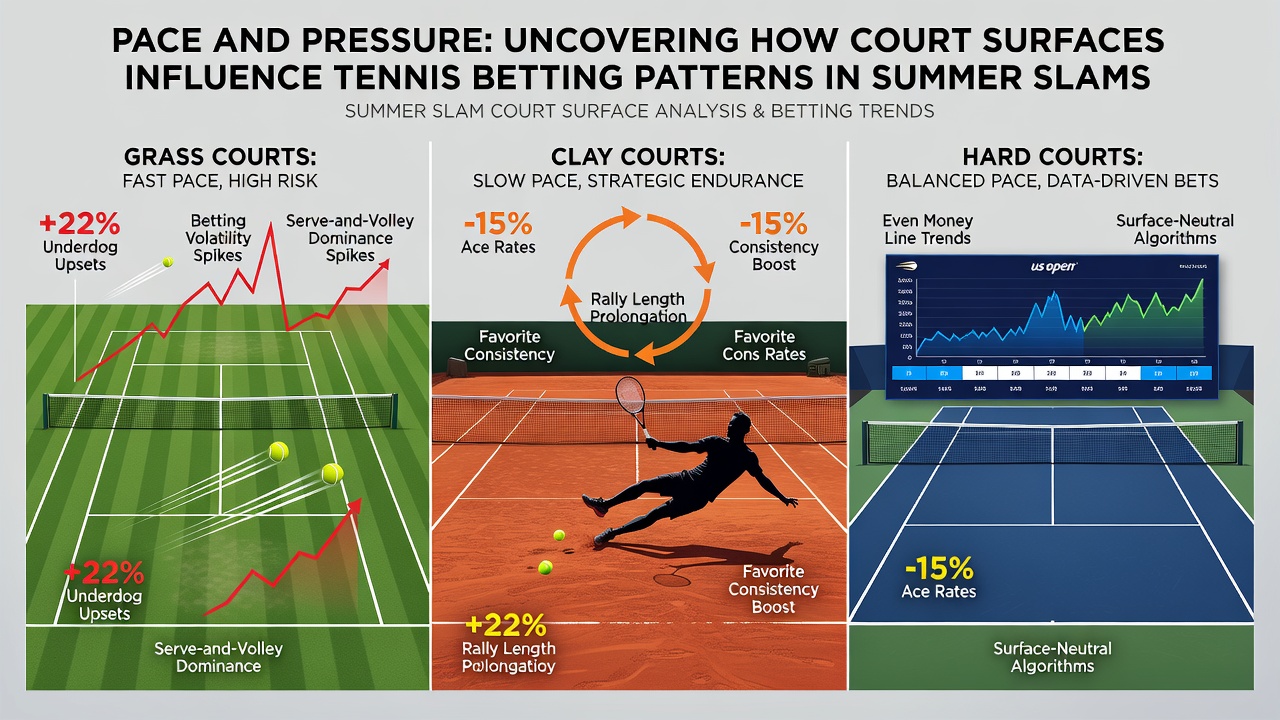
Grass surfaces at Wimbledon accelerate ball speed and shorten rallies which leads to elevated ace counts and fewer breaks of serve according to historical match data compiled by the ATP Tour. Players with strong serving records often see their implied probabilities adjust upward in live markets during early rounds when the grass remains firm and fast. Those who have reviewed multiple seasons of statistics recognize that underdog payouts on sets won by big servers increase noticeably in the first week because the surface compresses reaction time for returners and limits defensive recovery options.
Hard Court Dynamics at the US Open
The hard courts at the US Open provide medium pace and higher bounce which extends rally durations and rewards baseline consistency over pure power. Data from past tournaments indicates that total games per match rise compared with grass events and this pattern prompts bettors to favor over lines in game totals while reducing wagers on straight-set victories for top seeds. Researchers tracking player movement metrics have found that fatigue accumulates differently on hard courts which influences late-tournament betting volumes as underdogs gain traction in extended fifth sets.
Market Response Patterns Across Surfaces
Betting exchanges and bookmakers recalibrate odds based on surface-specific trends that emerge from the opening matches of each slam. On grass the frequency of tiebreaks climbs which shifts accumulator structures toward set handicap markets rather than match winners alone. Hard court play meanwhile generates steadier point spreads that encourage volume on player performance props such as double faults and first-serve percentages. Those who monitor live odds note that rapid price movements occur after the first set on grass because early breaks signal potential dominance while hard court matches often require deeper sets before clear patterns stabilize.
Statistical Influences on Wager Types
Figures from multiple seasons reveal that serve-dominated matches on grass elevate the popularity of set betting and over/under totals on games while hard court events see increased activity around player to win the most points in a set. A study published by the University of Queensland examined surface friction and ball deceleration rates which correlate with higher break percentages on slower hard courts and correspondingly lower odds on favorites holding serve throughout entire matches. Bettors who integrate these metrics often adjust stake sizes when weather conditions alter court speed mid-tournament as seen in several July 2026 Wimbledon sessions where humidity softened the grass and extended average rally lengths.
Player Adaptation and Market Implications
Top-ranked players adapt their strategies to surface demands yet the transition between Wimbledon and the US Open creates windows where betting markets lag behind actual performance shifts. Data collected by Tennis Australia shows that players who excel on grass experience a measurable drop in first-serve win rates when moving to hard courts which prompts sharper bettors to target underdog spreads in the early rounds of the US Open. This adaptation cycle repeats annually and market makers respond by widening margins on cross-surface player props to account for historical variance in results.
Regional Regulatory Context for Tennis Markets
Authorities such as the Australian Competition and Consumer Commission oversee advertising standards that affect how operators present surface-related betting information to the public. Similar frameworks in the European Union require clear disclosure of odds calculation methods tied to tournament data which ensures transparency when markets respond to grass versus hard court variables. These rules shape the availability of specialized props without restricting access to core match markets that reflect surface-driven statistics.
Conclusion
Court surfaces remain a central variable that shapes both athletic outcomes and the structure of tennis betting activity during the summer slams. Grass at Wimbledon compresses point duration and elevates serve dominance while hard courts at the US Open extend rallies and balance statistical distributions across player profiles. Observers who track these elements through verified match data and regulatory disclosures continue to identify consistent patterns that inform how markets evolve from the first serve of each event through the final.